

Jeddah Tower: Saudi Arabia's 1,000-Metre Ambition
One of the most closely watched projects is Jeddah Tower, located within the Jeddah Economic City development on Saudi Arabia's Red Sea coast.
The tower is planned to exceed 1,000 metres in height, putting it in line to become the world's tallest building once completed. Construction resumed in 2025 after a lengthy interruption, and the project is targeting completion later this decade.
Designed by Adrian Smith + Gordon Gill Architecture, the tower is planned as a mixed-use landmark incorporating residential units, offices, hospitality and retail facilities.
Its design uses a streamlined, tapering form intended to reduce the impact of strong winds at extreme heights. The building is also planned to feature an observation facility positioned hundreds of metres above ground level.
The project forms part of Jeddah Economic City, a major development intended to create a new urban and commercial destination along the Red Sea.
Rise Tower Could Take Vertical Construction to a New Level
Saudi Arabia's ambitions extend considerably beyond the Jeddah project.
Rise Tower in Riyadh has been proposed at an extraordinary height of approximately 2,000 metres. If delivered at its planned scale, it would be more than twice the height of Dubai's 828-metre Burj Khalifa.
The tower is associated with the North Pole development in northern Riyadh and has been designed by Foster + Partners.
The proposal envisages a highly integrated vertical destination containing a mixture of hospitality, offices, residences, dining, observation areas and entertainment facilities.
Unlike Jeddah Tower, Rise Tower remains a proposed development rather than a completed or fully constructed building. Its eventual delivery will therefore depend on the project's progression through design, procurement and construction stages.
Nevertheless, the scale of the proposal illustrates the direction of Saudi Arabia's urban development strategy, where large infrastructure and real estate projects are being used to create new economic and lifestyle destinations.
Dubai Continues Its Supertall Development Pipeline
While Saudi Arabia is pursuing some of the world's most ambitious tower concepts, Dubai remains one of the Gulf's leading markets for supertall construction.
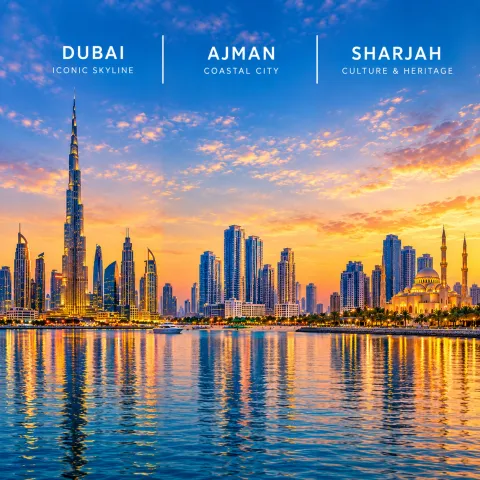
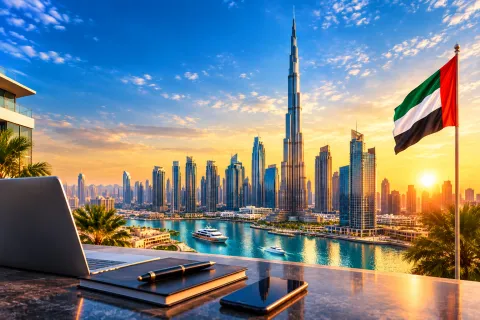
The emirate already holds the global height record through the 828-metre Burj Khalifa, but a new generation of projects is preparing to add further landmarks to the Dubai skyline.
Burj Azizi
Among the most prominent projects is Burj Azizi, a major tower being developed by Azizi Developments.
The project has a planned height of around 725 metres and is expected to include a combination of luxury residences, hospitality, retail and other lifestyle facilities.
Its scale would place it among the world's tallest buildings if completed as planned.
The development is also designed around several high-end hospitality and leisure features, reflecting Dubai's continued focus on combining real estate with tourism and premium lifestyle experiences.
Uptown Dubai Tower
Another major project in Dubai's future skyline is Uptown Dubai Tower 1, which has been reported with a planned height of more than 700 metres.
The tower forms part of the wider Uptown Dubai development and is intended to create a major mixed-use destination combining commercial, residential and hospitality components.
The project demonstrates how Dubai's approach to vertical development is increasingly tied to master-planned districts rather than isolated skyscrapers.
Why the Gulf Is Building Higher
The race to construct taller towers is not simply about height.
Across Saudi Arabia and the UAE, major skyscraper projects are being incorporated into wider urban development strategies.
For developers and governments, landmark towers can serve multiple purposes: attracting international visitors, creating premium residential and office space, strengthening tourism infrastructure and establishing recognizable symbols for new districts.
Saudi Arabia's development programme has placed particular emphasis on economic diversification, urban transformation and the creation of new destinations. The country's current skyscraper pipeline reflects those priorities.
Dubai, meanwhile, has spent decades developing a globally recognised real estate and tourism ecosystem in which landmark architecture plays an important role.
Engineering Challenges Increase With Height
Building at extreme heights introduces challenges that are very different from conventional high-rise construction.
Wind loads become increasingly important as buildings rise, while structural movement, elevator systems, emergency evacuation, water supply and energy management all require specialised engineering solutions.
At heights approaching or exceeding one kilometre, even seemingly routine building systems become complex engineering problems.
Designers therefore have to consider the building as an integrated system, balancing structural efficiency, occupant comfort, environmental conditions and operational requirements.
A New Chapter for Gulf Real Estate
The emergence of these projects points to a significant change in the Gulf's real estate landscape.
For decades, Dubai was the region's most visible symbol of supertall development. Today, Saudi Arabia has entered the same conversation with projects that are considerably more ambitious in proposed scale.
The result is a rapidly changing Gulf skyline, with Riyadh, Jeddah and Dubai each developing distinctive approaches to vertical urbanisation.
Whether every proposed megatower reaches its announced height remains dependent on construction, financing, planning and market conditions. But the projects already demonstrate the region's willingness to experiment with unprecedented architectural scale.
As construction advances and new developments move from concept to reality, the next generation of Gulf skyscrapers could fundamentally change how the world's major cities view vertical development.
The Gulf's skyscraper story is therefore no longer centred on a single landmark. It is becoming a broader competition of ideas, engineering capabilities and new urban destinations stretching from Dubai to Riyadh and Jeddah.
Disclosure: INUBIZ Marketing, the agency owned by Pashtun Global’s founder, has provided marketing support for Azizi Developments’ Florence community in Sharjah. The relationship had no bearing on this reporting.



Comments 0
No comments yet. Be the first to share your view.